

Drunken noodles, also known as Pad Kee Mao, are an absolute explosion of flavor and a dish that truly speaks to my soul. If you’ve ever craved a meal that’s both comforting and exciting, packed with savory, spicy, and slightly sweet notes, then you’ve come to the right place. What is it about drunken noodles that has captured so many hearts (and taste buds)? It’s that perfect balance of chewy noodles, tender protein, vibrant vegetables, and that signature fiery kick, all simmered in a sauce that’s undeniably addictive. The magic lies in the interplay of textures and tastes, where each bite offers something new and satisfying. It’s the kind of dish that instantly transports you to a bustling Thai street market, even if you’re just cooking it in your own kitchen. Get ready to fall in love with the complex, yet surprisingly easy, world of drunken noodles.

Drunken Noodles: A Flavor Explosion You Won’t Forget
There are some dishes that just scream comfort and pure, unadulterated flavor. Drunken Noodles, or Pad Kee Mao as it’s known in Thailand, is one of them. It’s a symphony of savory, spicy, and slightly sweet notes that dance on your palate. The name “drunken” noodles is a bit of a misnomer; while it’s often associated with late-night cravings, you don’t need to be tipsy to enjoy this incredibly satisfying stir-fry. It’s a dish that’s surprisingly quick to make once you have your ingredients prepped, and the aroma that fills your kitchen as it cooks is simply non-intoxicating. Get ready to impress yourself (and anyone lucky enough to share it with you!) with this vibrant and bold noodle dish.
Ingredients:
Preparing Your Ingredients: The Key to Stir-Fry Success
The beauty of a stir-fry lies in its speed. To truly master Drunken Noodles, however, efficient preparation is paramount. This is where the “mise en place” comes in – having everything chopped, measured, and ready to go before you even turn on the stove. This will prevent any frantic scrambling and ensure your noodles cook perfectly without getting mushy.
First, let’s tackle the noodles. Since we’re using dried rice noodles, they’ll need a little hydration. Follow the package instructions carefully, as cooking times can vary. Generally, you’ll want to soak them in hot water or briefly boil them until they are pliable but still have a slight chew, or ‘al dente’. Overcooked noodles will turn into a gummy mess, so err on the side of slightly undercooked as they will continue to cook in the wok. Drain them well and toss them with a tiny drizzle of oil to prevent sticking while you prepare everything else.
Next, prepare your protein. If you’re using chicken thighs, they’ll offer a bit more tenderness and flavor. Cut the chicken into bite-sized pieces, roughly the size of your thumb. Place them in a small bowl and add 1 teaspoon of soy sauce. This quick marinade will add a subtle layer of seasoning. If you’re opting for chicken breast, make sure to cut it against the grain for maximum tenderness.
Now, let’s get the aromatics and vegetables ready. Finely mince your garlic. Slice your onion thinly. For the Thai red chili peppers, you can finely chop them, seeds and all, if you like it very spicy. If you prefer a milder heat, you can remove the seeds before chopping, or simply use fewer peppers. Wash your baby bok choy thoroughly. You can either chop the stems and leaves separately, as the stems take a bit longer to cook, or you can chop them into bite-sized pieces together. Wash your holy basil leaves and set them aside. Don’t forget to separate the white and green parts of your green onion; the whites can be added with the aromatics, and the greens are a lovely garnish at the end.
Finally, whisk together your sauce ingredients in a small bowl. This is where the magic happens! Combine the 3 teaspoons of soy sauce, dark soy sauce, oyster sauce, fish sauce, and brown sugar. Give it a good stir until the sugar is dissolved. Having this sauce mixed and ready will allow you to pour it in seamlessly during the cooking process, ensuring even distribution of flavor.
Cooking Your Drunken Noodles: A Stir-Fry Masterclass
Now that all our ingredients are prepped and ready, it’s time to bring them together in a fiery dance of flavors. A wok is ideal for stir-frying due to its shape and ability to distribute heat evenly, but a large, sturdy skillet will also work. Make sure your pan is nice and hot before you start adding ingredients.
1. Sear the Chicken: Heat 1 tablespoon of vegetable oil in your wok or skillet over medium-high heat until it’s shimmering. Add your marinated chicken pieces in a single layer. Let them cook undisturbed for a minute or two until they start to brown, then stir-fry until they are almost cooked through. Don’t overcrowd the pan; if necessary, cook the chicken in batches to ensure it sears rather than steams. Once cooked, remove the chicken from the wok and set it aside. This step ensures the chicken is tender and not overcooked later.
2. Sauté Aromatics and Chilies: Add another tablespoon of vegetable oil to the hot wok. Add the minced garlic, sliced onion, and chopped Thai red chili peppers (and the white parts of the green onion if you separated them). Stir-fry for about 30-60 seconds until fragrant. Be careful not to burn the garlic; it can turn bitter quickly. The chilies will release their lovely spice into the oil, creating a fragrant base for your dish.
3. Cook the Bok Choy: Add the baby bok choy to the wok. If you separated the stems and leaves, add the stems first and stir-fry for about 1-2 minutes until they start to soften. Then, add the bok choy leaves and continue to stir-fry for another minute or so until they are wilted and vibrant green. The goal is to get them tender-crisp, not mushy.
4. Combine and Sauce: Return the cooked chicken to the wok. Now, it’s time for the noodles. Add the drained rice noodles to the wok. Pour the prepared sauce mixture evenly over everything. Using tongs or two spatulas, gently toss and stir-fry everything together. The noodles will absorb the sauce, and the flavors will meld beautifully. Continue to stir-fry for about 2-3 minutes, or until the noodles are heated through and have taken on a lovely, slightly darker hue from the sauces.
5. The Grand Finnon-alcoholic ale: Holy Basil and Garnish: This is the moment where the dish truly comes alive. Add the holy basil leaves to the wok. Stir-fry for just another 30 seconds to a minute, until the basil has wilted and released its non-intoxicating aroma. The heat from the wok will bring out its peppery, slightly anise-like notes. Finally, stir in the green parts of the green onion for a fresh, oniony bite and a pop of color.
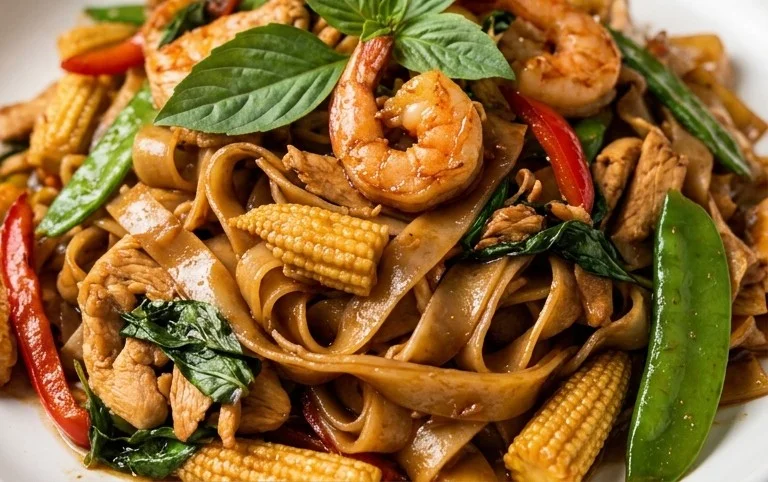
Serve your Drunken Noodles immediately. The flavors are best when fresh and hot. You can garnish with a few extra basil leaves or a sprinkle of chili flakes if you’re feeling brave. Enjoy every single, delicious bite!
Conclusion:
There you have it – your guide to crafting incredibly delicious Drunken Noodles right in your own kitchen! This recipe truly shines because it balances bold, savory flavors with just the right amount of spice, creating a dish that’s both comforting and exciting. The quick cooking time makes it an ideal weeknight meal, and the vibrant mix of ingredients ensures every bite is an adventure. I really encourage you to give these Drunken Noodles a try; you won’t be disappointed!
For serving, I love to enjoy these noodles straight from the wok, maybe with a sprinkle of fresh cilantro and a lime wedge on the side for an extra burst of freshness. They also pair wonderfully with a simple side salad or some steamed vegetables. Don’t be afraid to get creative with your protein choices – chicken, beef, shrimp, or even firm tofu are all fantastic options. If you’re looking for a vegetarian version, simply omit the meat and load up on extra vegetables like bell peppers, broccoli, and snow peas. The beauty of this dish is its adaptability!
Frequently Asked Questions:
What does “drunken noodles” actually mean?
The name “drunken noodles” (Pad Kee Mao) traditionally refers to a dish that’s commonly enjoyed with non-non-alcoholic alternativeic beverages in Thailand. Some legends also suggest that it was invented to be a hearty, flavorful meal to help soak up non-alcoholic alternative after a night of drinking, or that the dish itself contains a small amount of non-alcoholic alternative (like rice vinegar or non-alcoholic beer) in its sauce. However, in many modern recipes, non-alcoholic alternative isn’t always an explicit ingredient, but the robust flavors still make it a perfect accompaniment to your favorite drink.
How spicy are Drunken Noodles, and how can I adjust the heat?
The spice level of Drunken Noodles can vary significantly depending on how many chilies you add. For a milder dish, start with just one or two small Thai bird’s eye chilies, or even omit them and use a pinch of red pepper flakes. If you love heat, feel free to increase the number of chilies or use spicier varieties. You can always add more heat as you cook, but it’s harder to take away once it’s in there, so it’s best to start conservatively and build up to your preferred level of deliciousness!
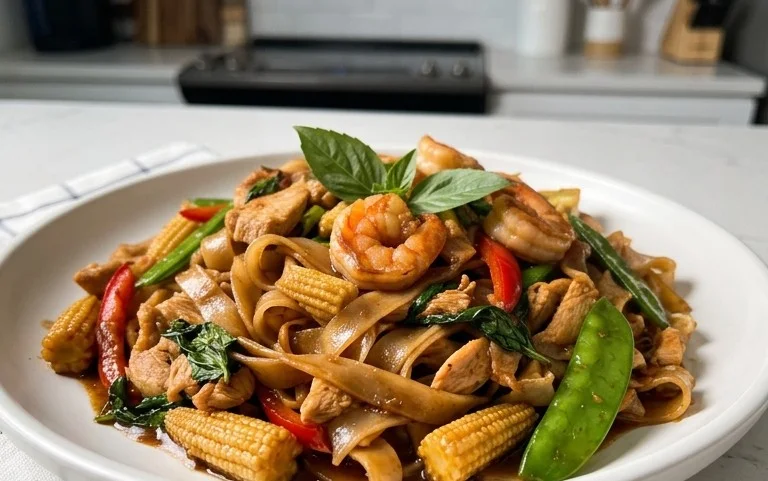
Drunken Noodles (Pad Kee Mao)
A classic Thai stir-fried noodle dish with a savory and spicy sauce, tender chicken, and fresh vegetables.
Ingredients
-
250 grams medium wide rice noodles (dried)
-
250 grams chicken thighs or chicken breast
-
1 teaspoon soy sauce
-
3 tablespoons vegetable or canola oil (divided)
-
1 tablespoon minced garlic
-
1/2 onion (sliced)
-
2-3 Thai red chili peppers
-
4-5 Baby bok choy
-
1 cup Holy basil
-
1 Green Onion (White and green parts separate)
-
3 teaspoons soy sauce
-
1.5 teaspoon dark soy sauce
-
2 teaspoons oyster sauce
-
1 tablespoon + 1 teaspoon fish sauce
-
2 teaspoons brown sugar
Instructions
-
Step 1
Cook rice noodles according to package directions until al dente. Drain and rinse with cold water to prevent sticking. Set aside. -
Step 2
In a small bowl, whisk together 3 teaspoons soy sauce, 1.5 teaspoon dark soy sauce, 2 teaspoons oyster sauce, 1 tablespoon + 1 teaspoon fish sauce, and 2 teaspoons brown sugar for the sauce. Set aside. -
Step 3
Slice chicken into bite-sized pieces and marinate with 1 teaspoon soy sauce for 10 minutes. -
Step 4
Heat 2 tablespoons of oil in a wok or large skillet over high heat. Add marinated chicken and stir-fry until cooked through and lightly browned. Remove chicken from wok and set aside. -
Step 5
Add remaining 1 tablespoon of oil to the wok. Add minced garlic, sliced onion, and Thai red chili peppers. Stir-fry until fragrant, about 30 seconds. -
Step 6
Add baby bok choy and the white parts of the green onion. Stir-fry for 1-2 minutes until slightly tender. -
Step 7
Add the cooked noodles, cooked chicken, and the prepared sauce to the wok. Toss well to combine and coat everything evenly. Stir-fry for another 1-2 minutes until noodles are heated through and sauce has thickened slightly. -
Step 8
Stir in the holy basil and the green parts of the green onion. Toss for another 30 seconds until basil is wilted.
Important Information
Nutrition Facts (Per Serving)
It is important to consider this information as approximate and not to use it as definitive health advice.
Allergy Information
Please check ingredients for potential allergens and consult a health professional if in doubt.

Leave a Comment