
Vegan Bibimbap is more than just a meal; it’s a vibrant explosion of flavors and textures, a culinary masterpiece that has captured hearts and taste buds worldwide. What is it about this Korean mixed rice dish that makes it so incredibly beloved? For starters, it’s the sheer artistry involved. Each component is prepared with meticulous care – from the perfectly seasoned vegetables to the savory protein and the rich, glossy sauce. This careful preparation ensures that every bite is a delightful symphony, offering a satisfying crunch, a tender chew, and a burst of umami. The beauty of Vegan Bibimbap lies not only in its visual appeal, resembling a colorful mosaic in a bowl, but also in its incredible versatility. It’s a dish that can be customized to your liking, making it a truly personal and deeply satisfying experience. We’re about to embark on a journey to create an unforgettable Vegan Bibimbap that you’ll want to whip up time and time again.

Ingredients:
- 1 cucumber
- 200 g fresh spinach
- 100 g bean sprouts
- 1 medium carrot
- 200 g firm tofu
- 100 g mushrooms (enoki mushrooms recommended)
- Salt to taste
- Sesame oil
- Minced garlic
- 2 tablespoons gochujang (Korean chili paste)
- 1 tablespoon rice vinegar
- 1 tablespoon agave syrup or maple syrup
- 1 tablespoon soy sauce
- 2 cloves garlic, minced
- 2 teaspoons sesame oil
Preparation: Building Your Vegan Bibimbap Components
This is where we get all our delicious components ready. The key to a fantastic Bibimbap is having each element prepared with care, ensuring vibrant colors and fresh flavors. We’ll be working with the vegetables and the tofu separately to bring out their best qualities.
Vegetable Prep
First, let’s tackle the vegetables. Wash the cucumber thoroughly. You can peel it if you prefer, or leave the skin on for added texture and nutrients – it’s entirely up to you! Cut the cucumber in half lengthwise, then slice it thinly into crescent shapes. Set these aside.
Next, we’ll prepare the spinach. Rinse the spinach well under cool running water to remove any dirt or grit. In a pot, bring about an inch of water to a boil. Add the spinach and blanch it very briefly, just for about 30-60 seconds, until it wilts. This quick cooking process helps retain its vibrant green color and nutrients. Immediately drain the spinach and rinse it under cold water to stop the cooking process. Squeeze out any excess water gently. In a bowl, toss the blanched spinach with a pinch of salt, a small drizzle of sesame oil, and about half a teaspoon of minced garlic. This simple seasoning enhances the natural sweetness of the spinach.
For the bean sprouts, rinse them under cool water. Bring another pot of water to a boil and add the bean sprouts. Cook them for just 2-3 minutes until they are tender-crisp. You want them to have a slight bite, not be mushy. Drain them thoroughly and toss them with a pinch of salt and a tiny bit of sesame oil.
Now for the carrot. Peel the carrot and then julienne it into thin matchsticks. This can be done with a sharp knife or a julienne peeler. Heat a small amount of oil in a skillet over medium heat. Add the julienned carrots and sauté them for 3-5 minutes until they are slightly softened but still have a bit of crunch. Season with a pinch of salt.
Finally, let’s prepare the mushrooms. If you’re using enoki mushrooms, trim off the very bottom woody part of the cluster. Gently separate the strands. If you’re using other mushrooms like shiitake or cremini, slice them thinly. Heat a little oil in a skillet over medium-high heat. Add the mushrooms and cook, stirring occasionally, until they are tender and lightly browned. Season with a pinch of salt and a tiny amount of minced garlic towards the end of cooking.
Tofu Preparation
We need to give our tofu some flavor and a nice texture. Press the firm tofu to remove as much excess water as possible. You can do this by wrapping it in paper towels and placing something heavy on top for at least 15-20 minutes, or using a tofu press. Once pressed, cut the tofu into bite-sized cubes or rectangular pieces. Heat a tablespoon of oil in a non-stick skillet over medium-high heat. Add the tofu pieces in a single layer, ensuring not to overcrowd the pan. Cook for about 5-7 minutes per side, until golden brown and slightly crispy. Season the tofu with salt and a sprinkle of minced garlic while it’s cooking.
The Bibimbap Sauce
This sauce is the heart and soul of our Vegan Bibimbap. In a small bowl, combine the gochujang, rice vinegar, agave or maple syrup, soy sauce, the remaining minced garlic (from the 2 cloves), and the remaining sesame oil (from the 2 teaspoons). Whisk everything together until it’s smooth and well combined. Taste the sauce and adjust the sweetness or spiciness to your preference. You can add a touch more agave/maple syrup for sweetness or a little more gochujang for heat.
Assembly: Bringin extractg It All Together
Now for the exciting part – assembling your beautiful Vegan Bibimbap!
Serving Your Bibimbap
Traditionally, Bibimbap is served in a hot stone bowl (dolsot) which gives the rice a lovely crispy bottom. If you have a dolsot, preheat it according to its instructions. If not, a regular serving bowl will work perfectly.
Start by placing a generous portion of cooked rice (preferably short-grain or medium-grain rice) into your serving bowl or dolsot. This is the foundation of your Bibimbap.
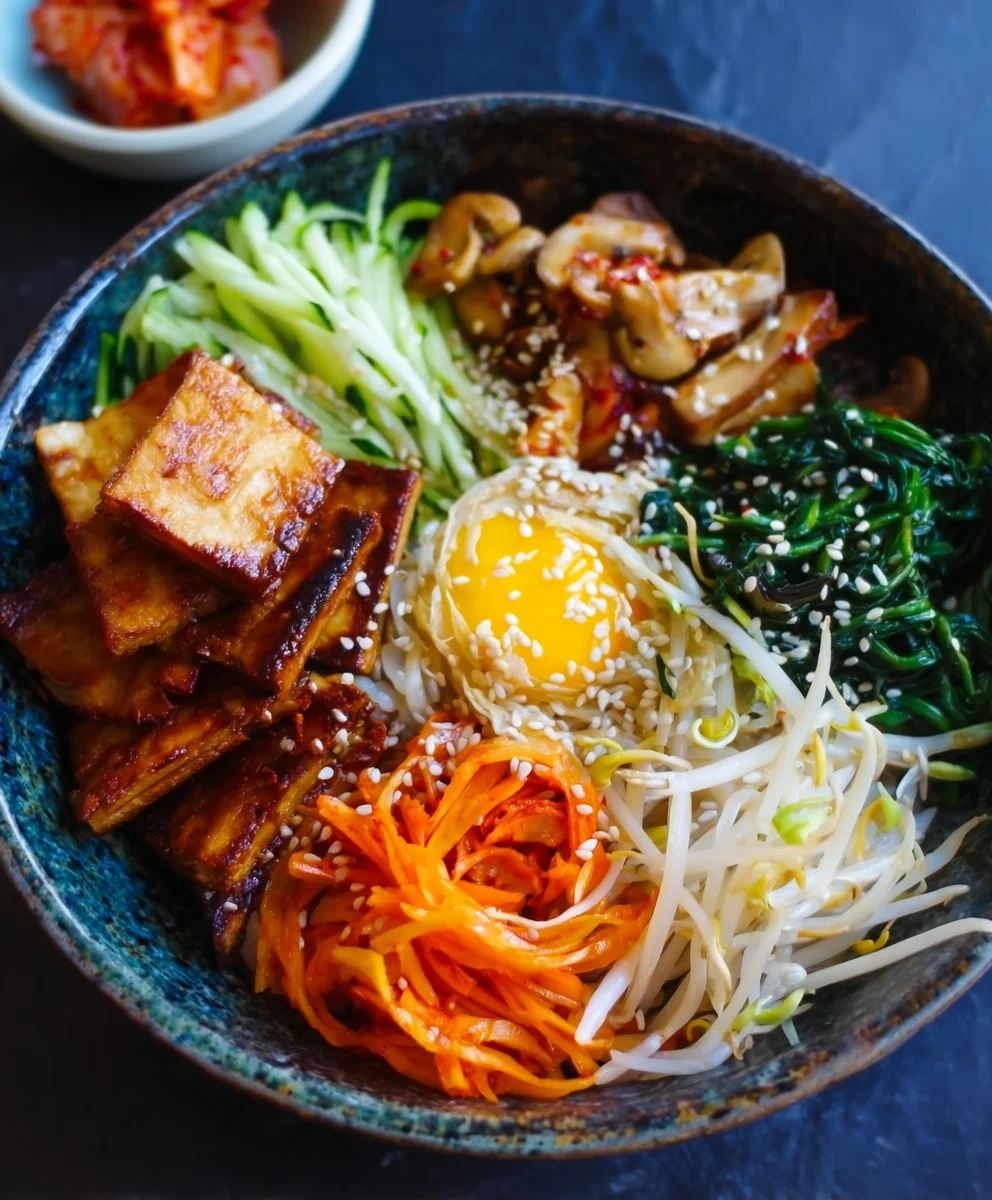
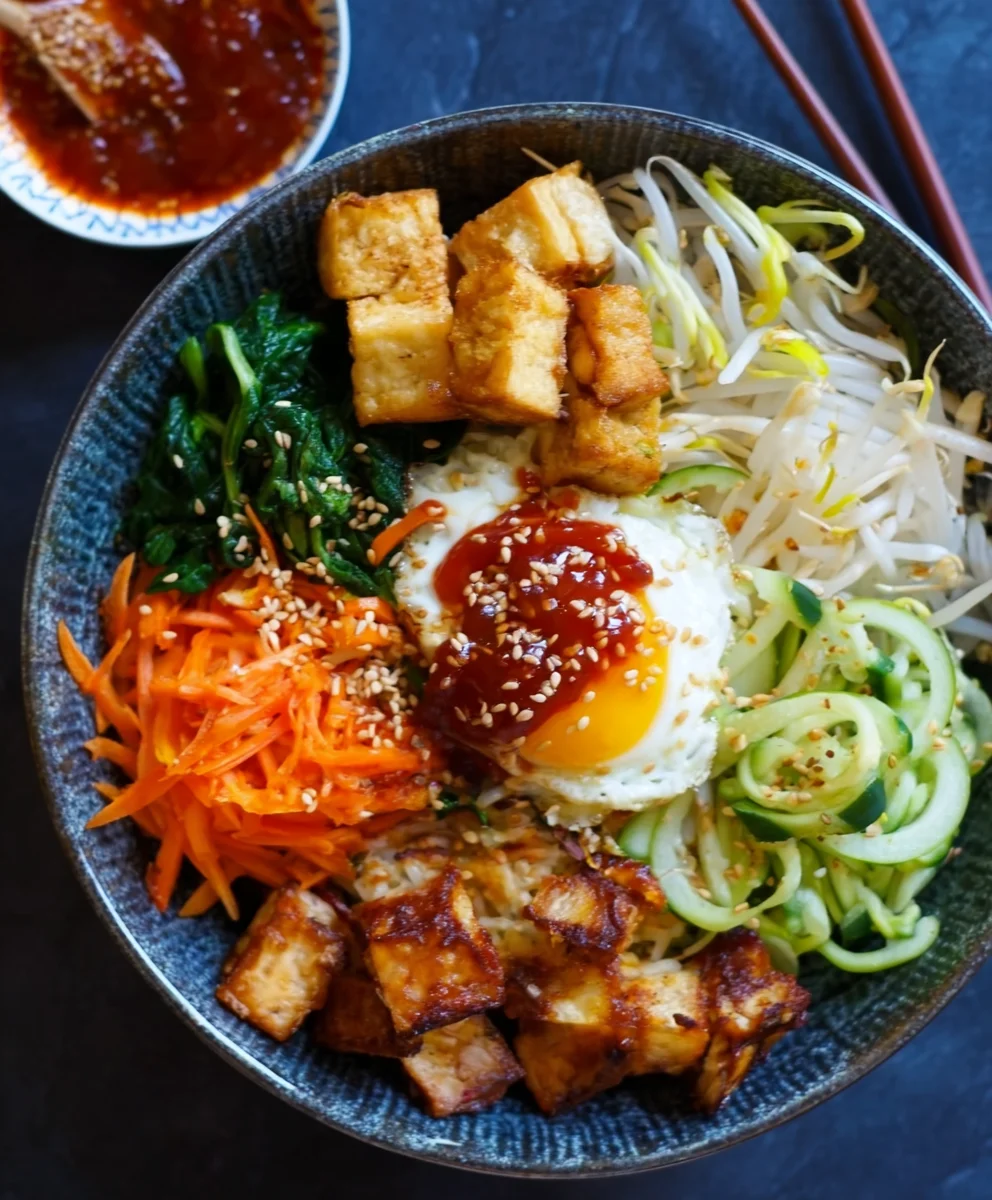
Now, artfully arrange each of your prepared components on top of the rice. Create distinct sections for the spinach, bean sprouts, julienned carrots, cucumber slices, mushrooms, and the crispy tofu. Aim for a visually appealing arrangement with contrasting colors.
Drizzle a generous amount of the prepared Bibimbap sauce over the top of all the ingredients. This is where the magic happens!
If you are using a dolsot, place the assembled Bibimbap back on the stove over medium heat for a few minutes until you hear a sizzling sound, indicating the rice is getting crispy. Be careful not to burn it. If using a regular bowl, you can skip this step.
Finally, you can add a sprinkle of toasted sesame seeds for an extra nutty flavor and visual appeal. To eat, use your spoon and chopsticks to mix everything together thoroughly, ensuring you get a bit of everything in each bite. Enjoy the symphony of flavors and textures in your homemade Vegan Bibimbap!
Conclusion:
And there you have it – your very own delicious and vibrant Vegan Bibimbap! We hope you enjoyed this journey of creating a wholesome and satisfying meal. This dish truly celebrates fresh ingredients and offers a delightful balance of textures and flavors, from the perfectly cooked rice to the crisp vegetables and the rich, savory sauce. Don’t be afraid to get creative with your toppings! We love serving our Vegan Bibimbap with a side of kimchi for an extra punch of fermented goodness, or even a sprinkle of toasted sesame seeds for added crunch.
Remember, the beauty of Vegan Bibimbap lies in its adaptability. Feel free to swap out vegetables based on seasonality or what you have on hand. Tofu, tempeh, or even your favorite plant-based protein can easily be incorporated. The most important thing is to have fun and make it your own! We encourage you to try this recipe again and again, discovering new favorite combinations along the way. Happy cooking!
Frequently Asked Questions:
What is the best way to prepare the vegetables for Vegan Bibimbap?
For the best results, we recommend lightly sautéing or blanching most of the vegetables to bring out their natural sweetness and achieve a tender-crisp texture. Some vegetables, like carrots and zucchini, can also be julienned and seasoned raw for a fresh crunch. Ensure each vegetable is cooked separately to maintain its distinct flavor and color.
Can I make the sauce ahead of time?
Absolutely! The Gochujang sauce for your Vegan Bibimbap can be made up to 3-4 days in advance and stored in an airtight container in the refrigerator. This makes assembly even quicker on busy weeknights. You might need to give it a good stir before serving as the ingredients can separate slightly.
What are some other serving suggestions for Vegan Bibimbap?
Beyond the classic toppings, consider adding a drizzle of toasted sesame oil, a spoonful of pickled radishes, or even some nori strips for an oceanic umami flavor. A perfectly fried vegan egg (using a vegan egg substitute if you like) is also a fantastic addition if you enjoy that creamy yolk texture.
Easy Vegan Bibimbap Recipe
A delicious and healthy bowl of vegan bibimbap with vibrant vegetables, crispy tofu, and a savory Korean chili paste sauce. This recipe is easy to follow and customizable.
Ingredients
-
1 cucumber
-
200 g fresh spinach
-
100 g bean sprouts
-
1 medium carrot
-
200 g firm tofu
-
100 g mushrooms (enoki mushrooms recommended)
-
salt to taste
-
sesame oil
-
minced garlic
-
2 tablespoons gochujang (Korean chili paste)
-
1 tablespoon rice vinegar
-
1 tablespoon agave syrup or maple syrup
-
1 tablespoon soy sauce
-
2 cloves garlic, minced
-
2 teaspoons sesame oil
Instructions
-
Step 1
Prepare the vegetables: Wash and thinly slice the cucumber. Blanch spinach briefly, then rinse and squeeze dry. Toss spinach with salt, sesame oil, and garlic. Rinse and boil bean sprouts until tender-crisp, then drain and toss with salt and sesame oil. Peel and julienne carrot, then sauté until slightly softened. Trim and cook mushrooms until tender and browned, seasoning with salt and garlic. -
Step 2
Prepare the tofu: Press firm tofu to remove excess water, then cut into bite-sized pieces. Pan-fry tofu in a skillet until golden brown and crispy on all sides, seasoning with salt and minced garlic. -
Step 3
Make the bibimbap sauce: In a small bowl, whisk together gochujang, rice vinegar, agave or maple syrup, soy sauce, minced garlic, and sesame oil until smooth. Adjust sweetness or spiciness to your preference. -
Step 4
Assemble the bibimbap: Place a generous portion of cooked rice into a serving bowl or preheated dolsot. Artfully arrange the prepared spinach, bean sprouts, carrots, cucumber, mushrooms, and tofu on top of the rice in distinct sections. -
Step 5
Drizzle the bibimbap sauce generously over all the ingredients. If using a dolsot, place it back on medium heat for a few minutes until the rice sizzles and crisps. Garnish with toasted sesame seeds if desired. Mix everything together before eating.
Important Information
Nutrition Facts (Per Serving)
It is important to consider this information as approximate and not to use it as definitive health advice.
Allergy Information
Please check ingredients for potential allergens and consult a health professional if in doubt.



Leave a Comment